PART 2: The First Blow. Calibration, Consent, and Conscious Beginnings
The first time you let someone to strike you on purpose, you start a conversation that uses the body as language. What you’re building isn’t endurance, it’s awareness. The ability to translate sensation into meaning and communicate it clearly. Calibration is the structure that makes that possible.
What This Scene Is For
Your first impact scenes are not tests of strength. They’re for learning how your body reacts, how adrenaline changes perception, and how to recognise the line between useful intensity and risk.
When you take time to learn this properly, later scenes become safer and more precise.
Readiness and Logistics
- Check your body. Have you rested, eaten, hydrated? Any muscle pain, skin issues, or medication that affects bruising or focus? Skip alcohol and stimulants.
- Check your head. Are you clear, stable, and able to tell the difference between discomfort and harm? Name your triggers.
- Plan your space. Private, quiet, with time for warm-up and aftercare. No rushing.
Choosing a Top and Setting
Choose someone patient, observant, and willing to learn with you. You’re not asking them to push you; you’re asking them to work accurately.
Use stable furniture, good lighting, and enough space for both of you to move. This part of your learning needs calm and focus.
Consent as Ongoing Practice
- Consent is not a one-time formality. It’s the live exchange of awareness between two people.
- Agree what tools are in scope, which areas are safe, and how you’ll communicate during play. Confirm reversibility: anything can stop at any time.
- Decide rules around sexual contact, photographs, and visible marks. Set a clear end point for the session.
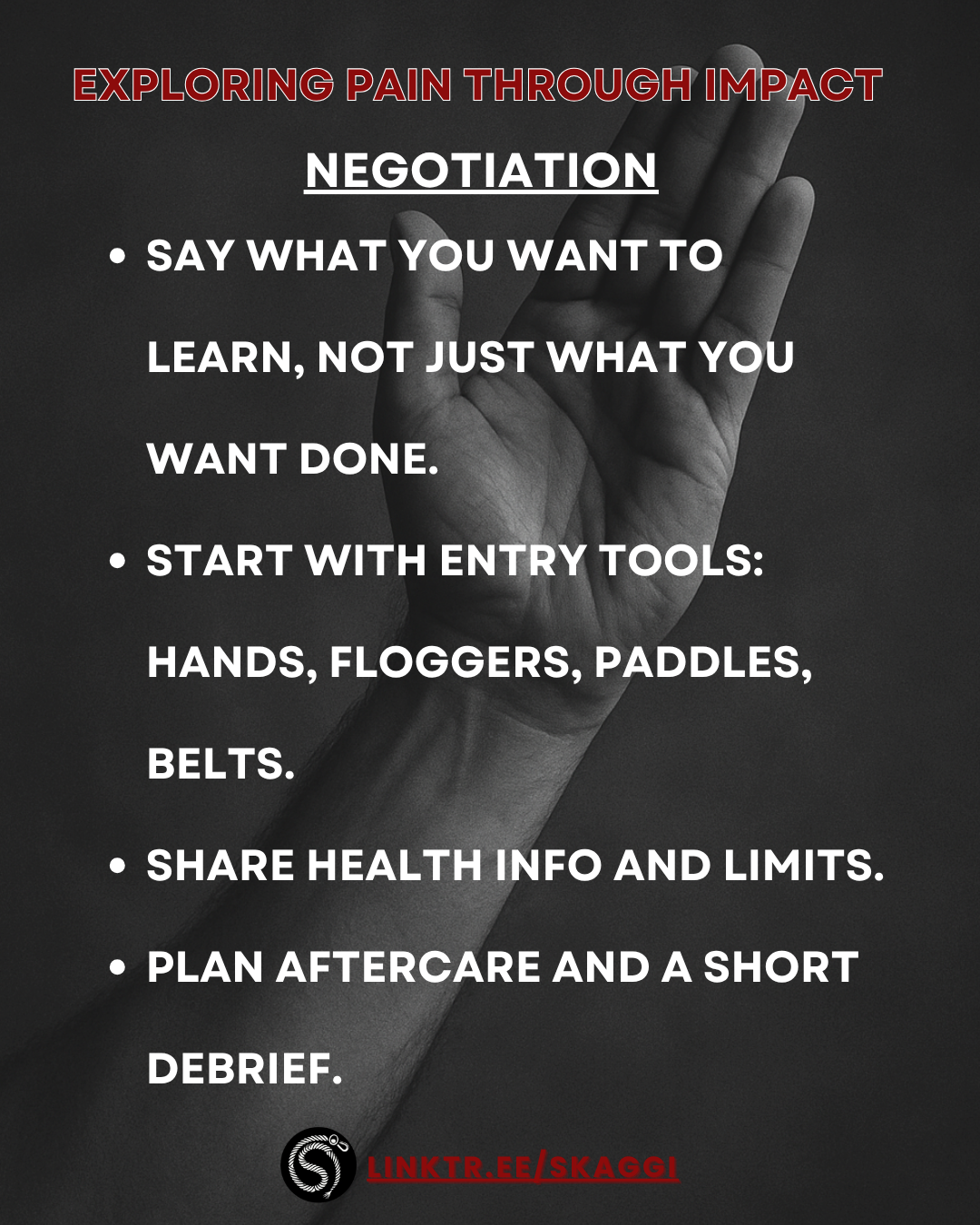
Negotiation You Lead
- Say what you want to learn, not what you want done.
- Start with entry-level tools: hands, mid-range floggers, short paddles, folded belts.
- Limit play to green and mild yellow zones.
- Share health information and triggers.
- Agree on words and signals for communication.
- Plan your aftercare and a follow-up debrief time.
This is education, not performance.
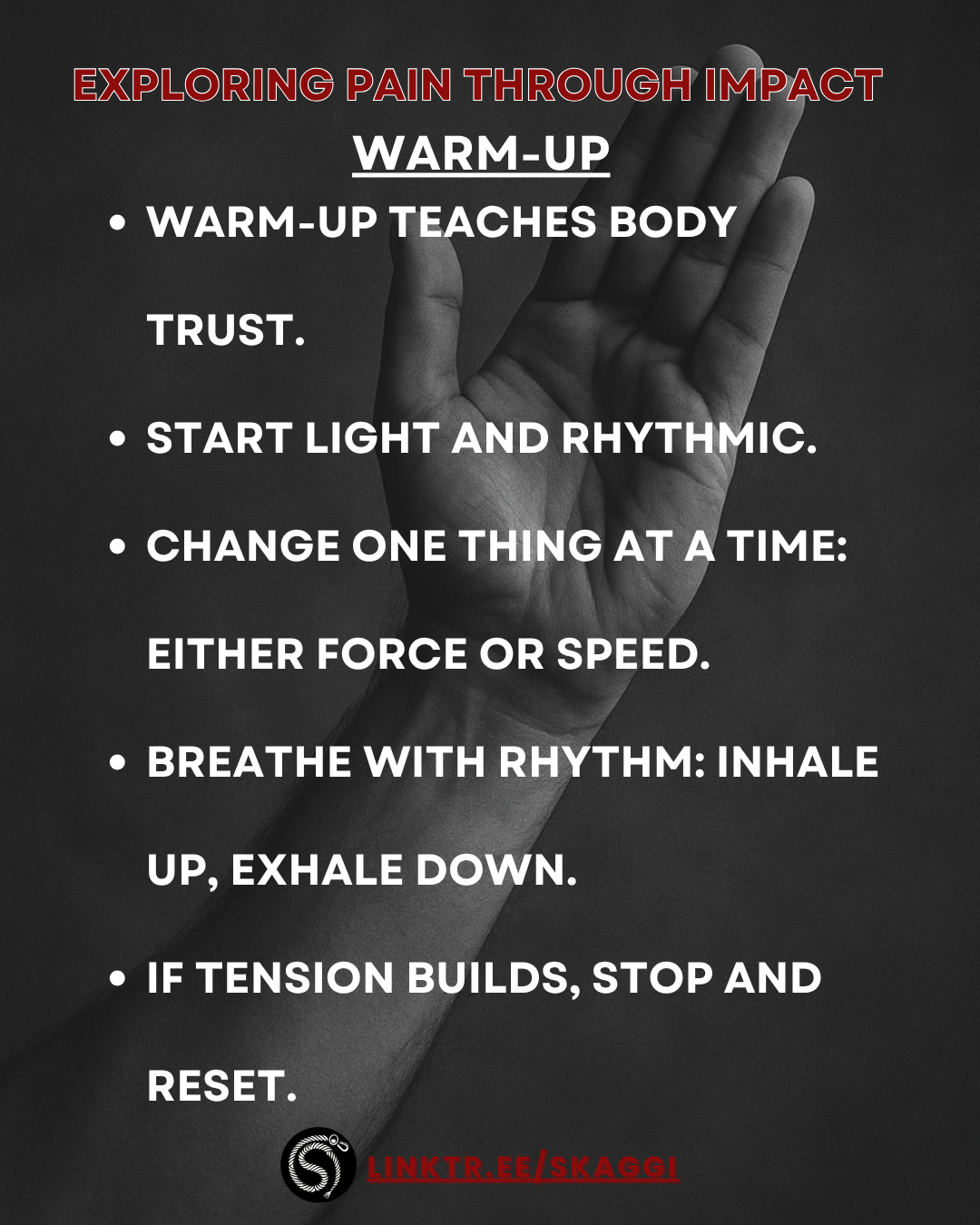
Warm-Up: Building Body Trust
Warm-up prepares tissue and teaches your nervous system that impact is information, not threat.
- Start with rubbing or light percussion on the chosen area.
- Increase gradually, changing only one variable, either force or speed.
- Match breath to rhythm: inhale on setup, exhale on strike.
If you flinch, stop, shake it out, and resume from the last steady level.
You are not proving tolerance; you are teaching your body to stay open and responsive.
Language: Describing What You Feel
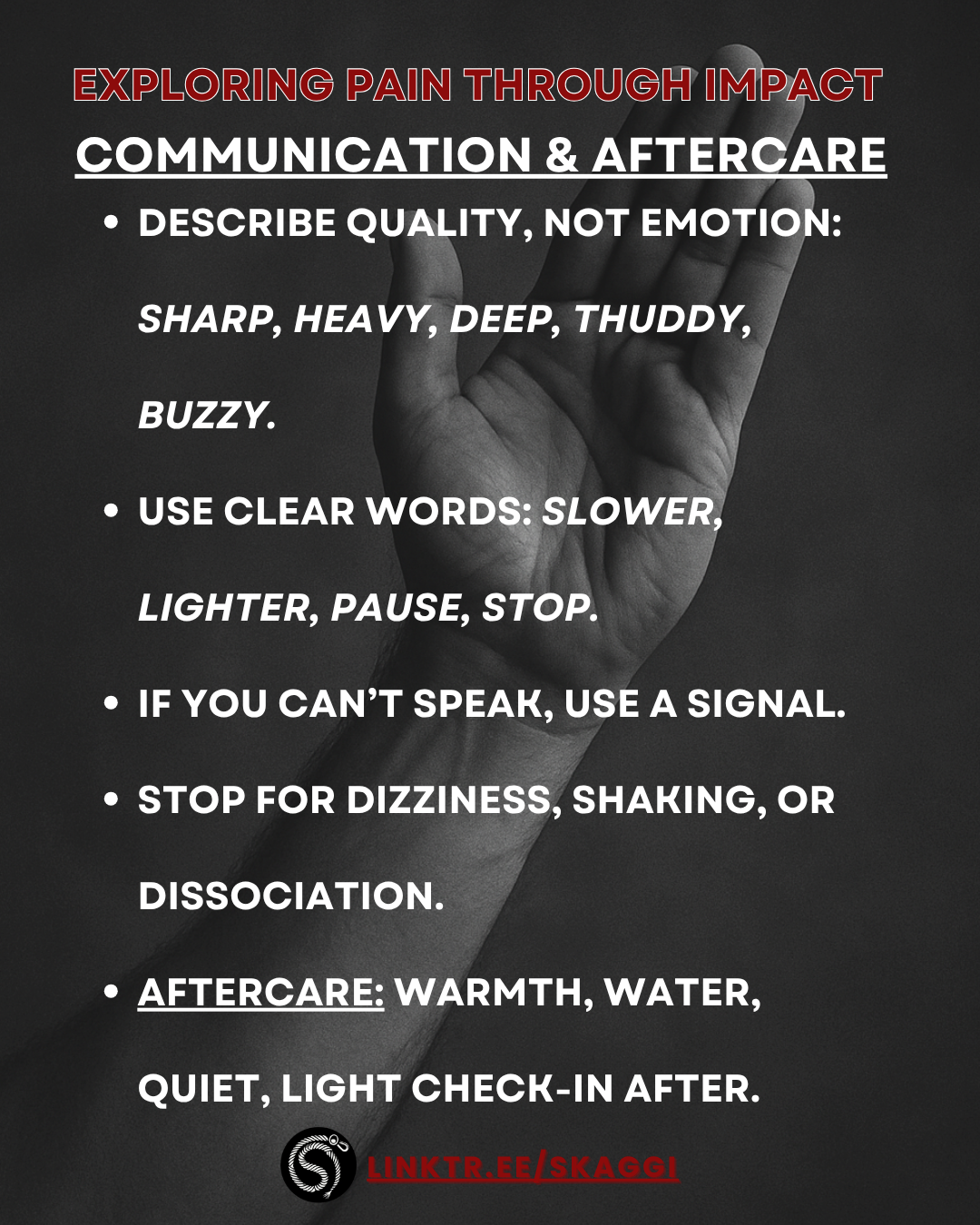
Describe sensations using words that carry information, not judgement.
Sharp. Heavy. Spreading. Deep. Surface. Buzzy. Thudding
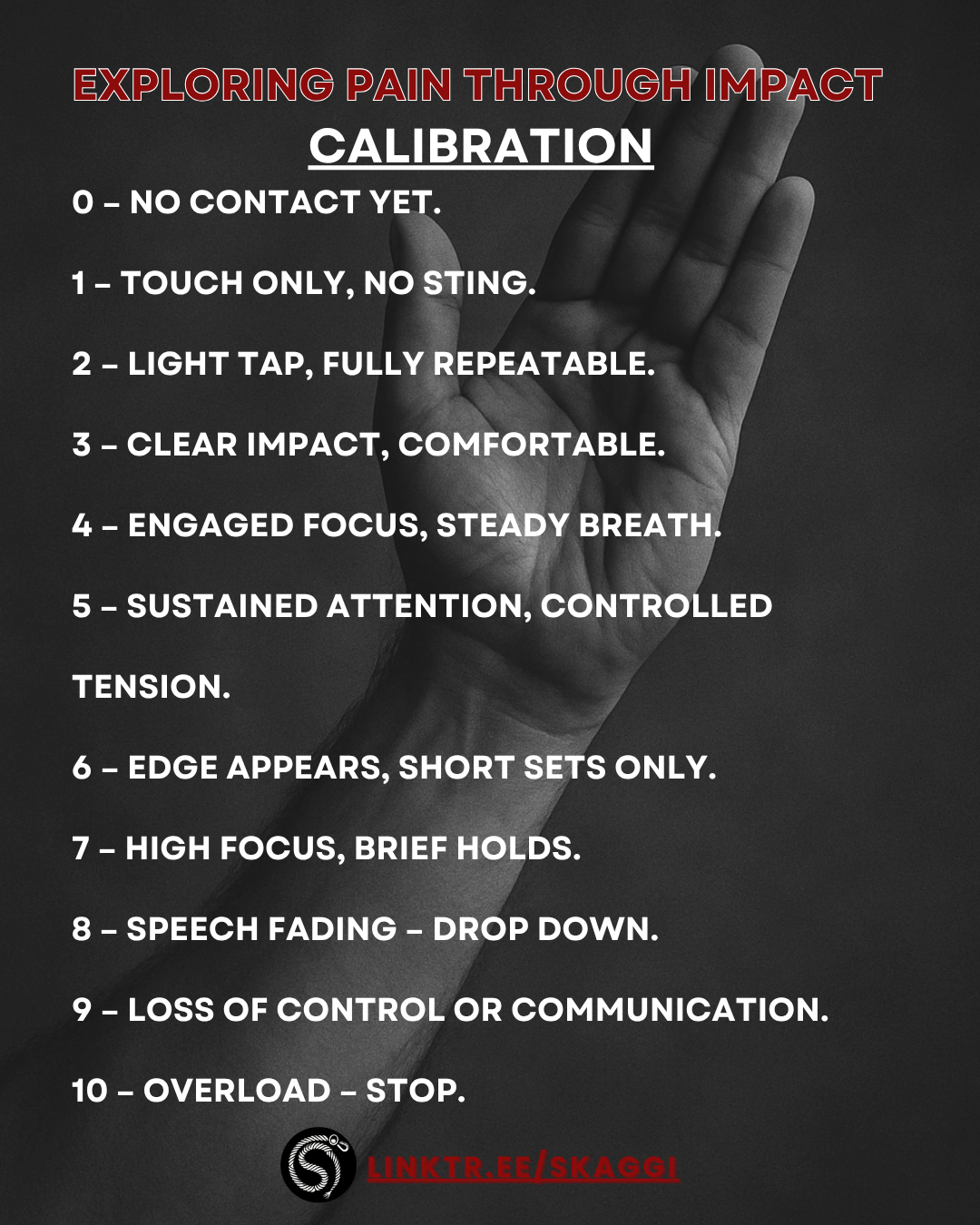
Pair these with your personal 0–10 scale that measures effect, not toughness.
0 – No impact yet
1–2 – Awareness only
3–4 – Clear contact, comfortable
5–6 – Requires focus, steady breath
7 – Edge approaching, hold briefly
8 – Communication effort increasing
9 – Losing clarity or control
10 – Overload. Stop.
Say things like
“That’s a 5, keep that,” or “That jump was an 8, drop down two.”
Your voice is data. Your top’s job is to act on it.
FOR TOPS: listen to both tone and timing. A calm “6” is not the same as one said through gritted teeth.
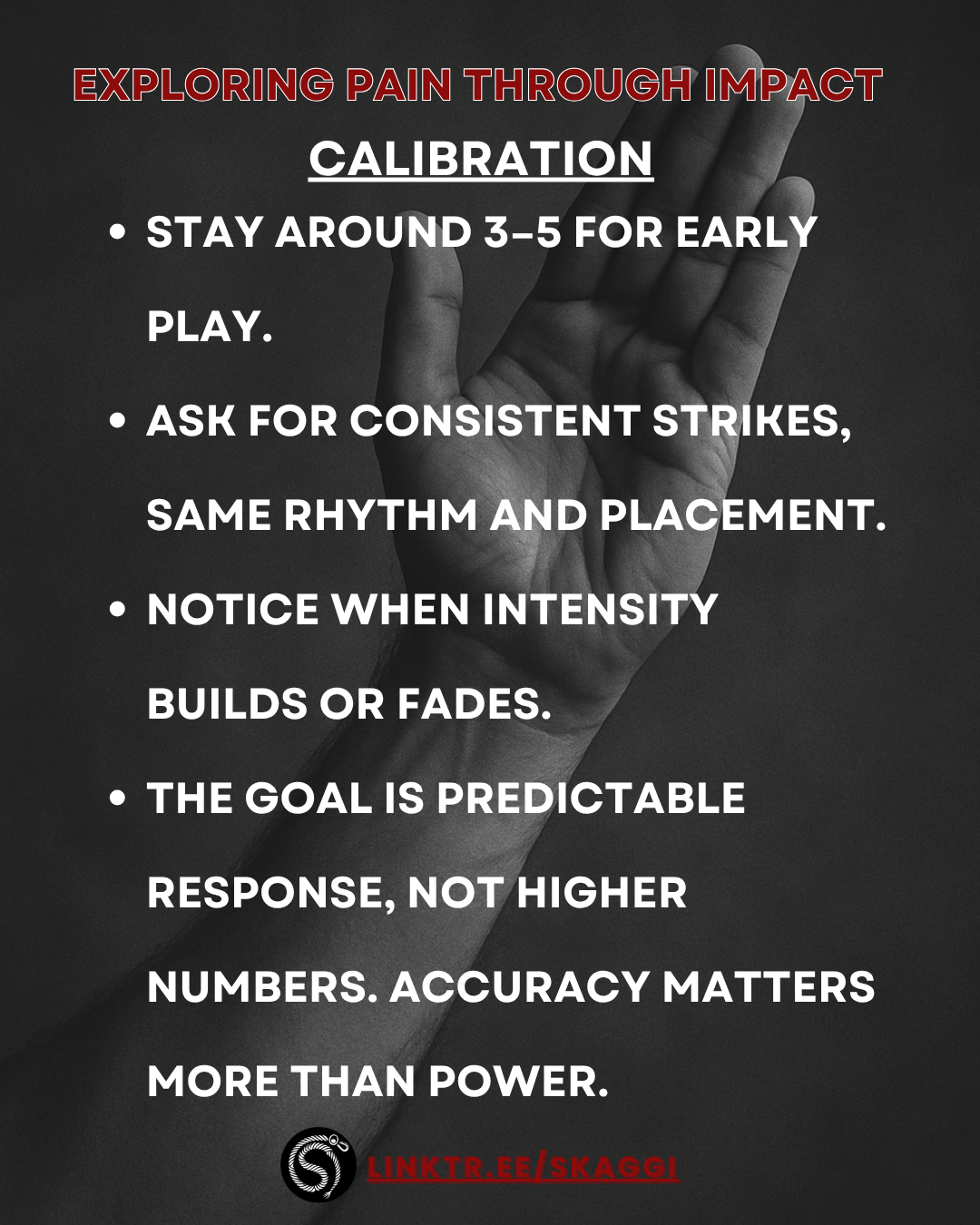
Calibration: Shared Awareness
Calibration is how both partners learn the same scale. It starts with your numbers but depends on observation and adjustment.
- Stay around 3 to 5 in your first sessions: alert, breathing, able to speak.
- Ask for sets of consistent strikes, same rhythm and placement. Note how sensation spreads or stacks. If you tense or hold breath, step back down.
- Your goal is to find a stable working range, not to climb.
- Track how your numbers shift with fatigue, fear, or adrenaline. They’ll change day to day.
FOR TOPS: Calibration means watching micro-reactions: breath, muscle tone, shoulders, eyes. Adjust by small degrees. Precision before intensity.
When this system works, both of you know what each number looks and feels like. That shared language is what makes future play accurate.
Positions and Bracing
- Keep posture balanced and breathing free.
- Feet flat, knees soft, shoulders relaxed.
- Support the torso if leaning forward, pad hips and ribs.
- When tension rises, exhale fully, loosen the jaw, reset, and continue.
In-Scene Communication
- Use short, functional words: slower, lighter, same, move, pause, stop.
- If you can’t speak, use a pre-agreed signal such as a hand squeeze.
FOR TOPS: The top should confirm each change aloud. Silence is not authority; it’s risk.
Stop Criteria
Stop immediately if you feel:
Dizziness, chest pain, tingling, nausea, shaking, or dissociation.
Say “stop.” Cover the body, slow breathing, drink water, and move to aftercare. Stopping early is part of learning control.
Aftercare
- Keep it simple. Warmth, water, quiet.
- Let body chemistry settle before you talk about details.
- Avoid very hot baths for an hour if marked.
- Moisturise later if needed.
- Allow any emotional release without analysis.
Debrief and Reflection
- Do a quick same-day check for anything urgent.
- Hold your full debrief 24–48 hours later.
- Ask: what worked, what didn’t, what surprised me, what to adjust next time.
- Write it down. Patterns become clear over time.
Next Steps
Start your next scene one level below your previous high point. Add only one new variable: rhythm, zone, or tool. Consistency builds skill; skill builds safety.
Learning impact is learning accuracy. The goal isn’t to take more, it’s to know more. When both of you can describe and read sensation clearly, power exchange becomes conscious choice, not guesswork.
That’s where good pain begins to mean something.
Audio Summary