PART 1: Where It All Starts. Your First Conversations with Pain
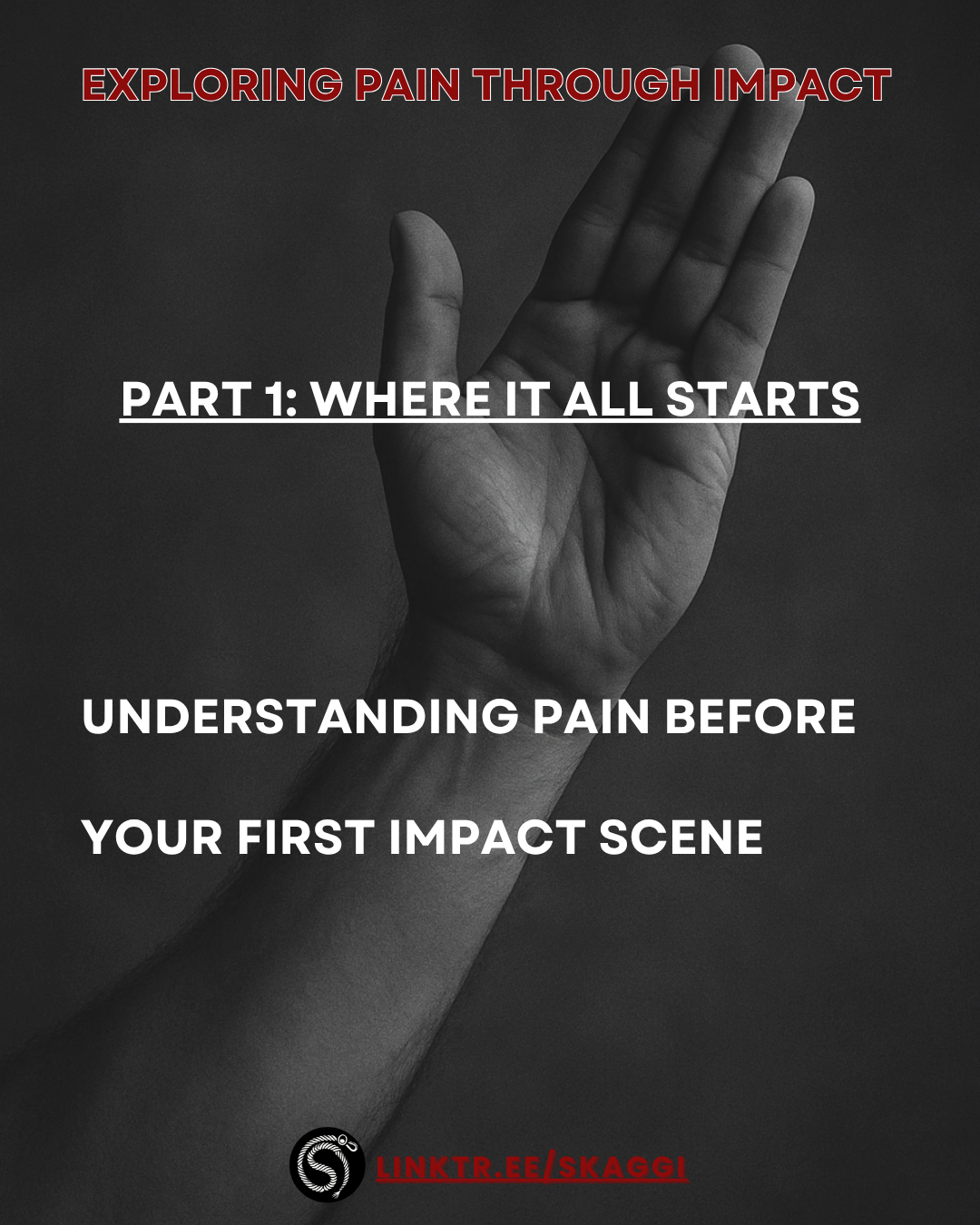
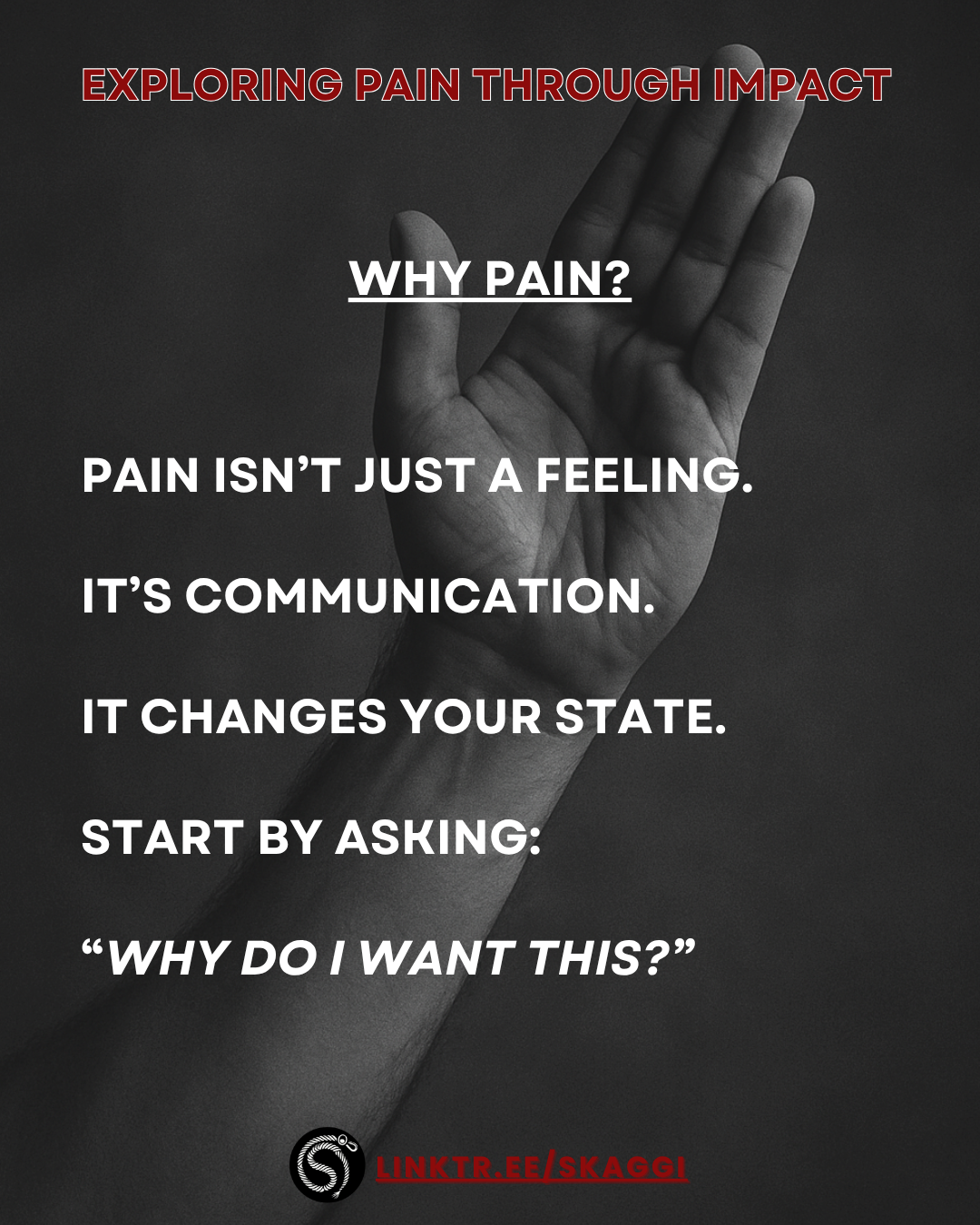
When we talk about exploring impact, most people start with tools. But there’s a quieter question: Why pain?
Why does it call to you? What do you want to feel, understand, or control through it?
You don’t need to have a perfect answer to begin, but you do need to start paying attention. Pain is more than sensation. It’s a way to communicate. It can build connection, express emotion, release pressure, or change the way you relate to your own body. But it can also overwhelm, backfire, or leave you confused if you don’t slow down and ask the right questions early on.
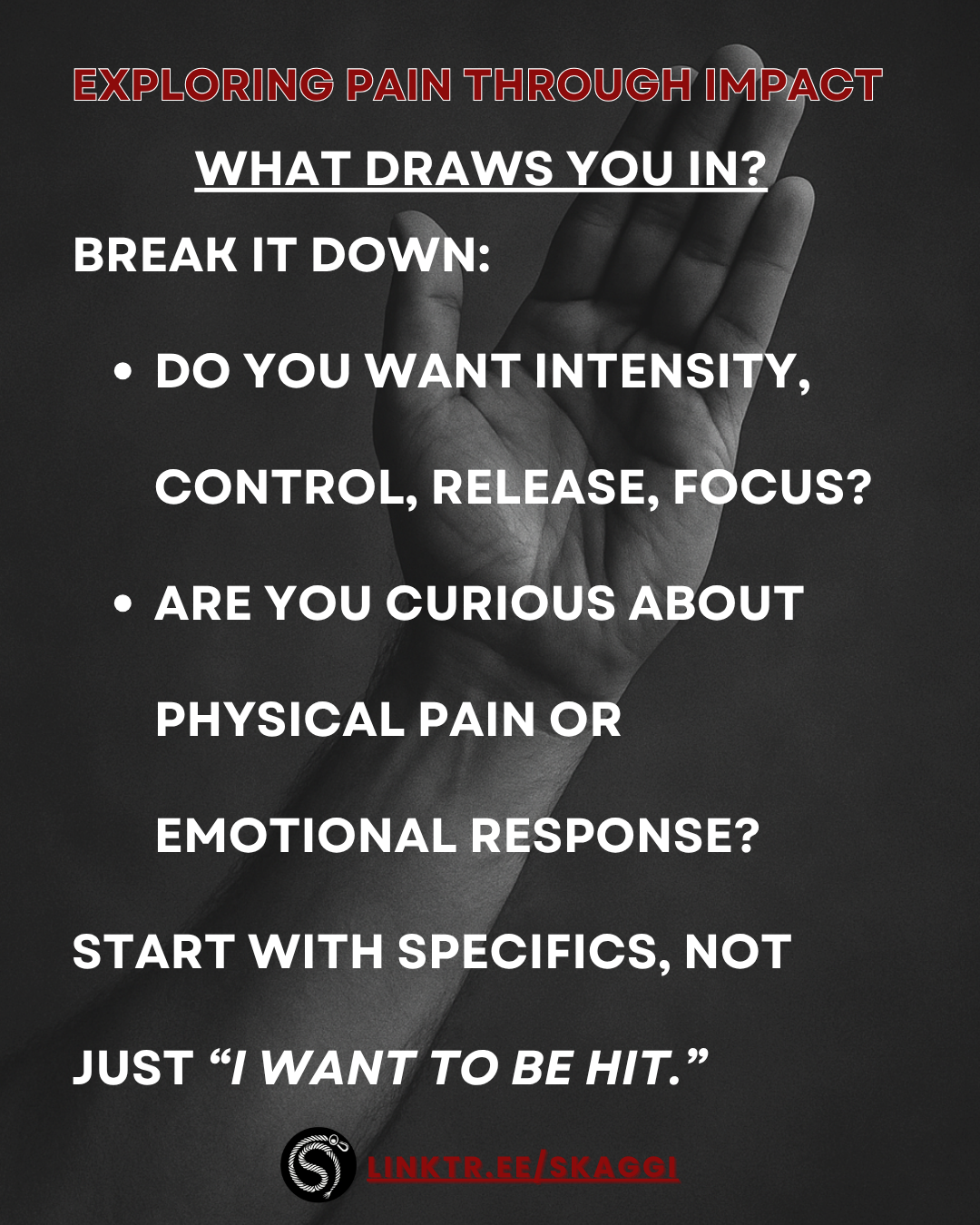
What Draws You In?
Start with your own motivations.
- Are you curious about physical pain because of the challenge?
- The emotional intensity?
- The sense of surrender, or control? Is it connected to arousal, or something else entirely?
Some people arrive in kink already knowing they like rough body sensations. Others discover it later, after trying roleplay, restraint, or power exchange. Wherever you’re starting from, this is the time to name what you want. Not what you think you should want, not what someone else expects.
If you’ve only ever said “I want to be spanked,” take time to break that down: what part of it pulls you in? The sound, the feeling, the ritual, the challenge?
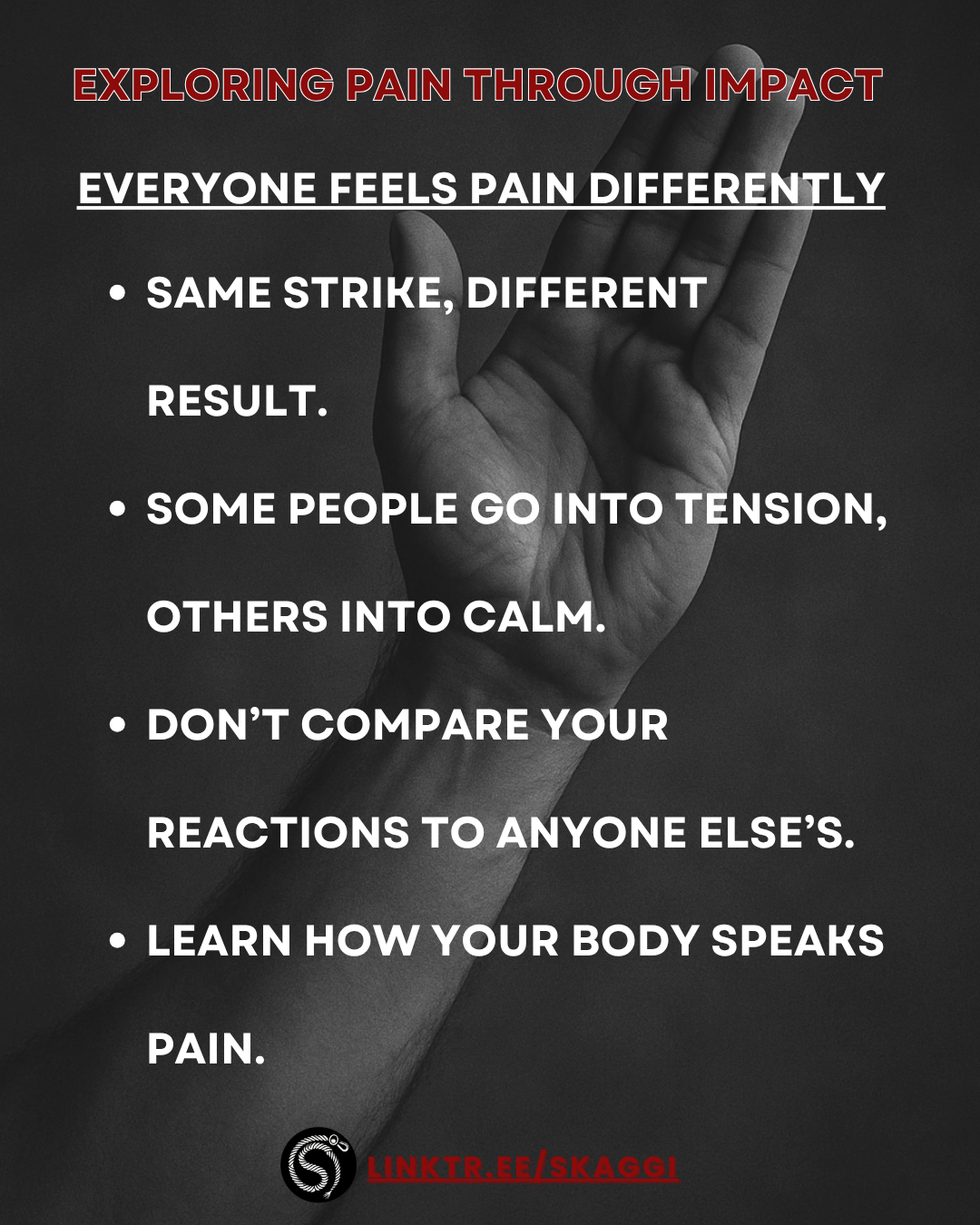
Your Pain Profile Is Yours Alone
Pain is not a universal language. Different people experience the same strike in completely different ways. Some bodies register deep thuds as comforting. Others go straight into tension from a light slap. You won’t know your preferences until you try a few things, slowly, and with care, but it’s important to know you don’t have to match anyone else’s reactions.
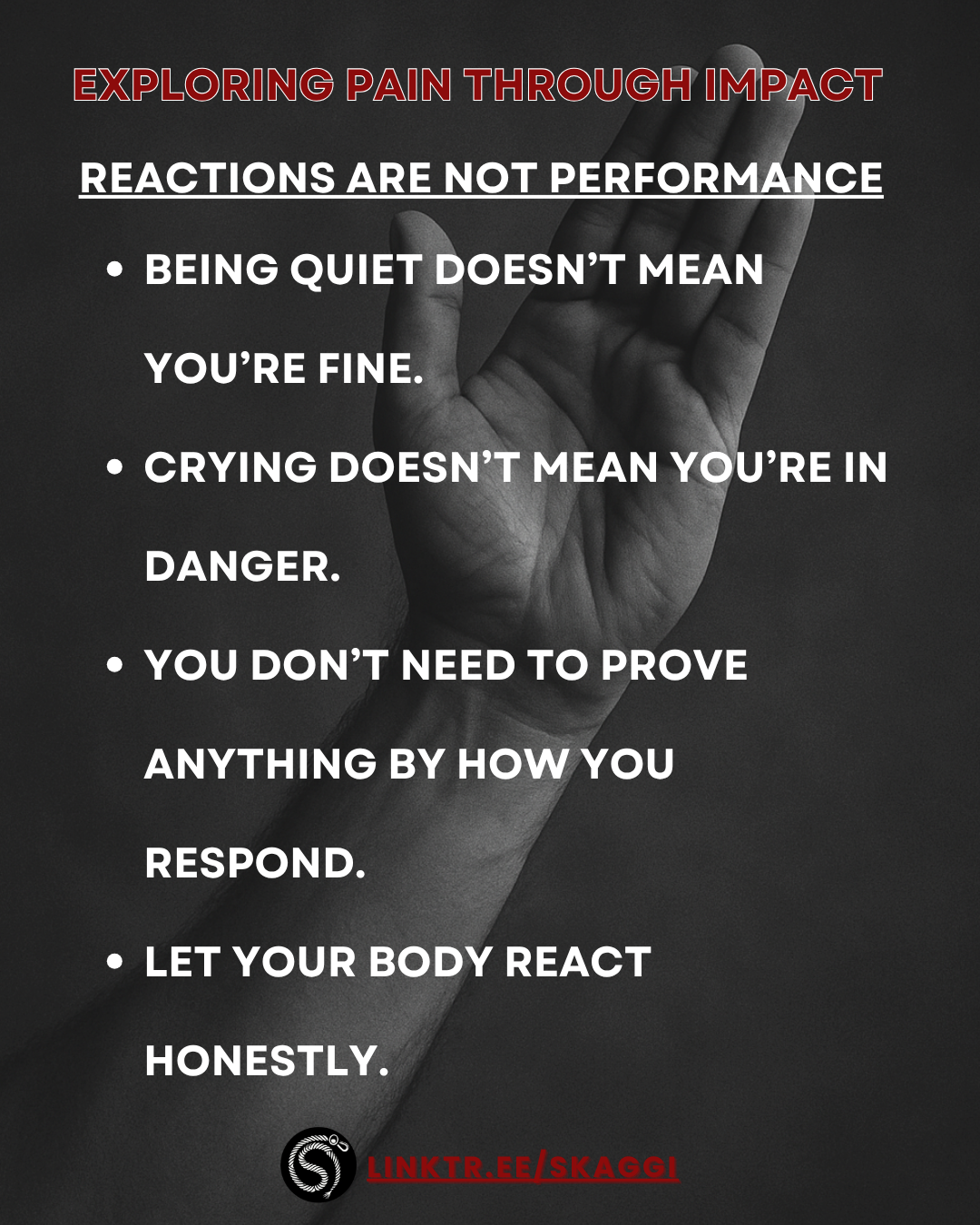
You don’t need to be loud to be expressive. You don’t need to be quiet to be strong. A so-called “high pain tolerance” is not a badge of honour, and pushing toward it too quickly can cause you to miss the value of smaller, more complex sensations. Impact play is not a competition. You’re here to learn your body, not conquer it.
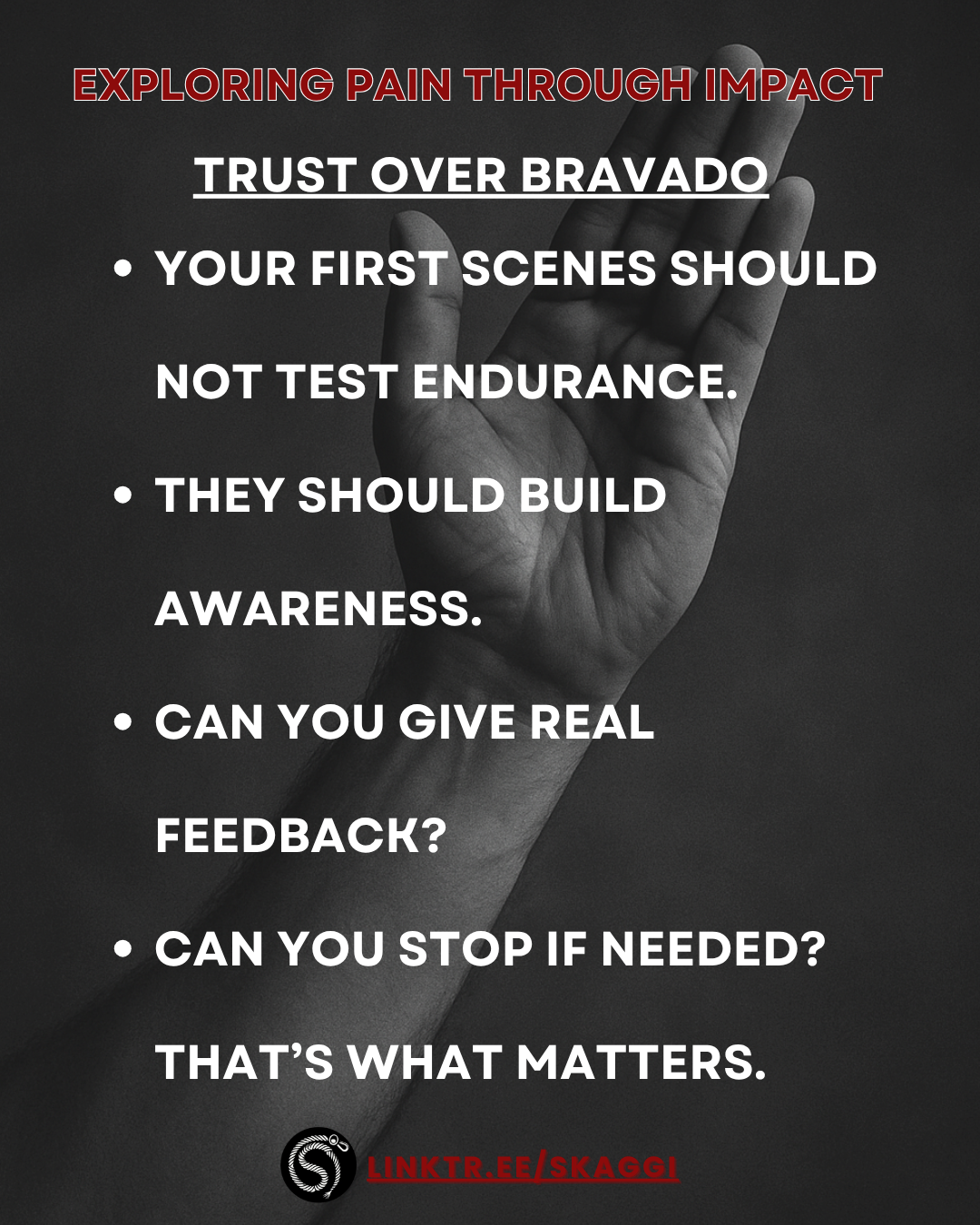
Pain Requires Trust, Not Bravado
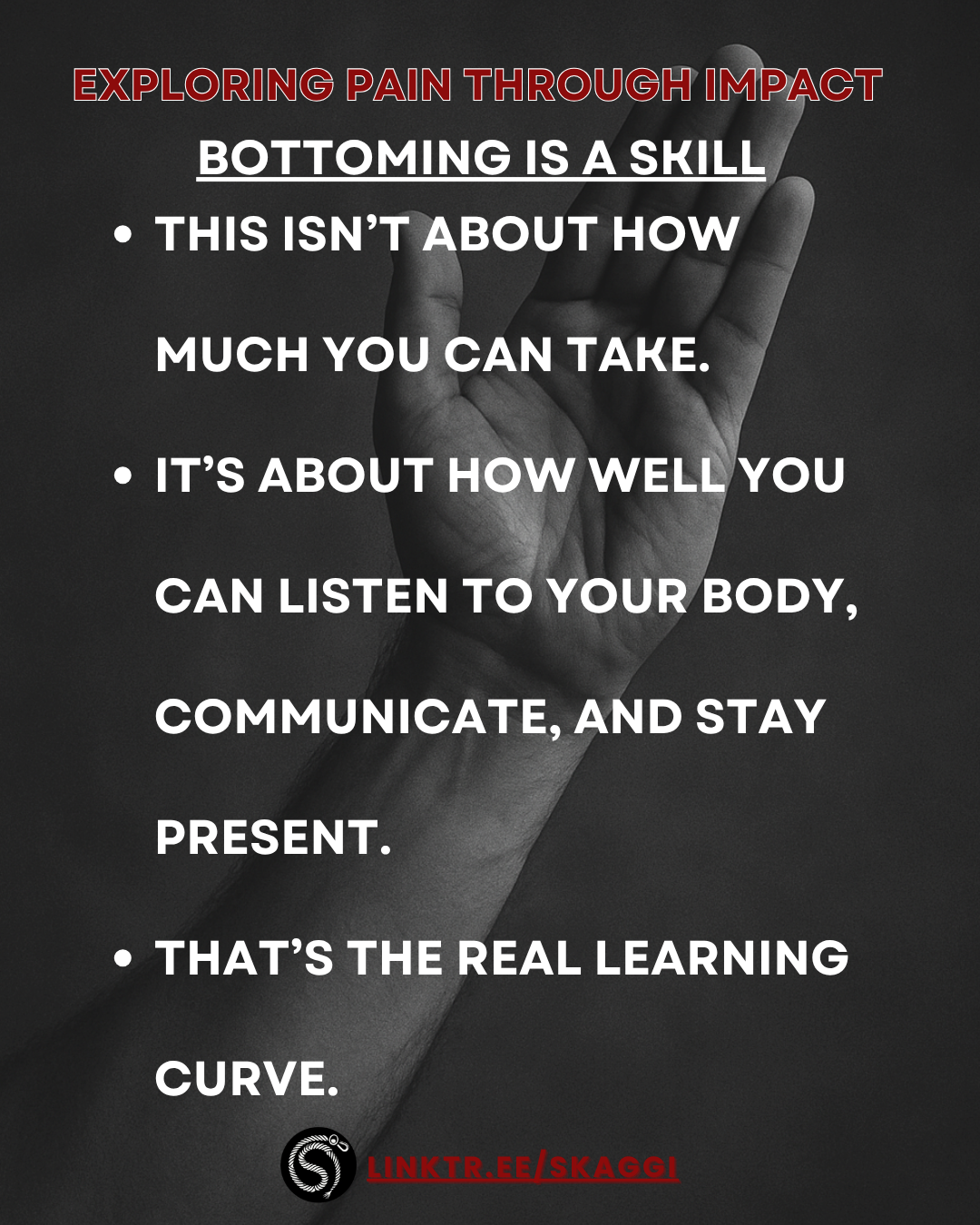
There’s a lot of pressure in kink culture to be “hardcore” or to “take more.” Ignore it. Your first experiences with impact should not be about how much you can endure. They should be about learning how your body communicates, how your nervous system responds, and how to stay grounded while sensation builds.
That means your relationship with the person topping you matters. You need to feel safe enough to give real feedback, safe enough to slow down or stop, and safe enough to react honestly: whether that’s moaning, crying, going quiet, or laughing. A partner who demands stoicism, intensity, or performative submission right away is not the right match for your learning process.
What You Should Know Before You Begin
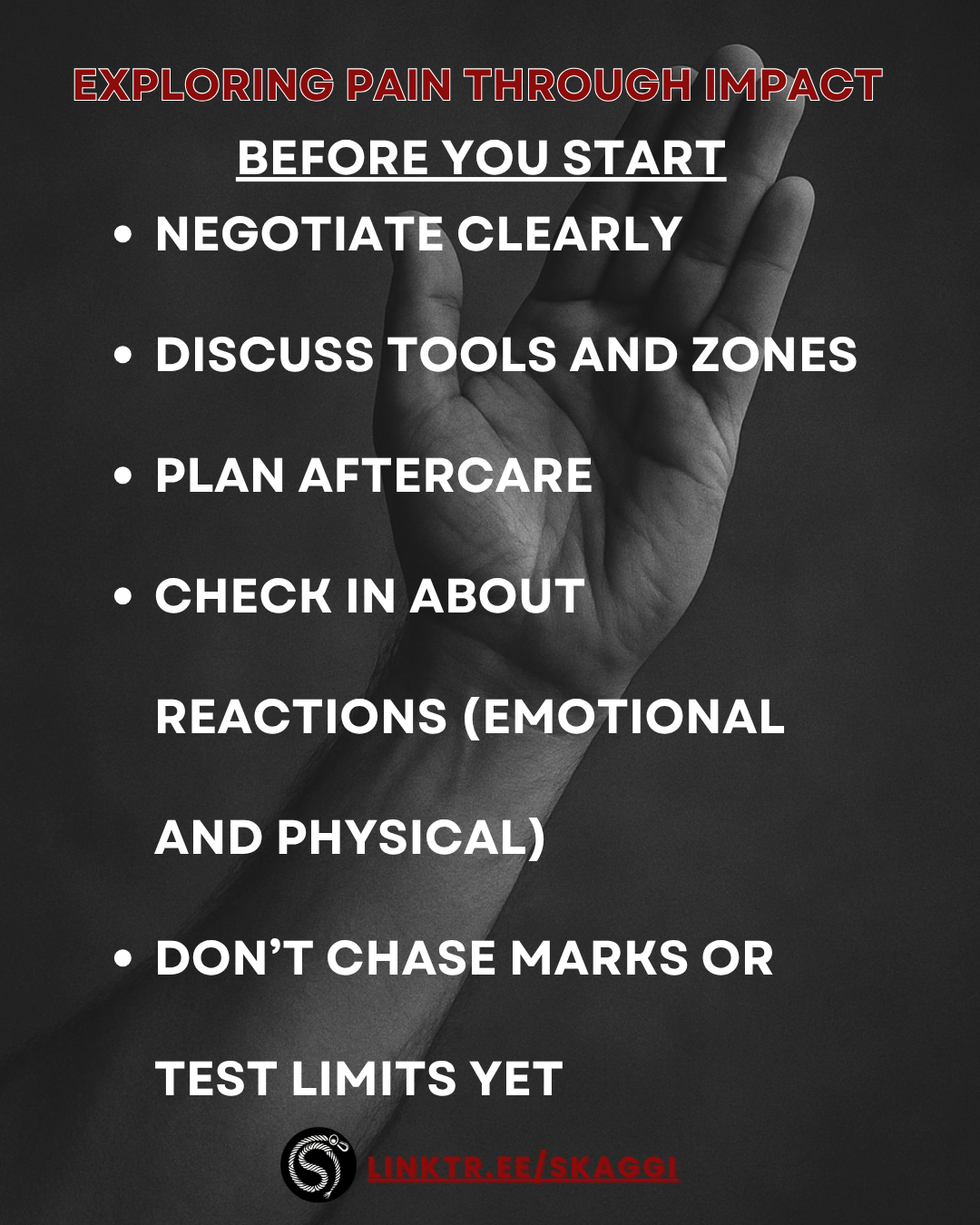
Your first scene should be negotiated slowly, with a clear understanding of what will and won’t be done.
- Plan for aftercare before you play. Impact can bring up unexpected emotions. Have time, space, and support set aside for recovery.
- Don’t fixate on marks. Some people bruise easily. Some don’t bruise at all. Neither is better.
- Let yourself react. Holding back tears, sound, or emotion to “prove” something will interrupt your ability to experience fully.
If you dissociate, freeze, or shut down, this is not failure. It’s information. Bring it to the surface gently when you debrief.
Mistakes Beginners Often Make
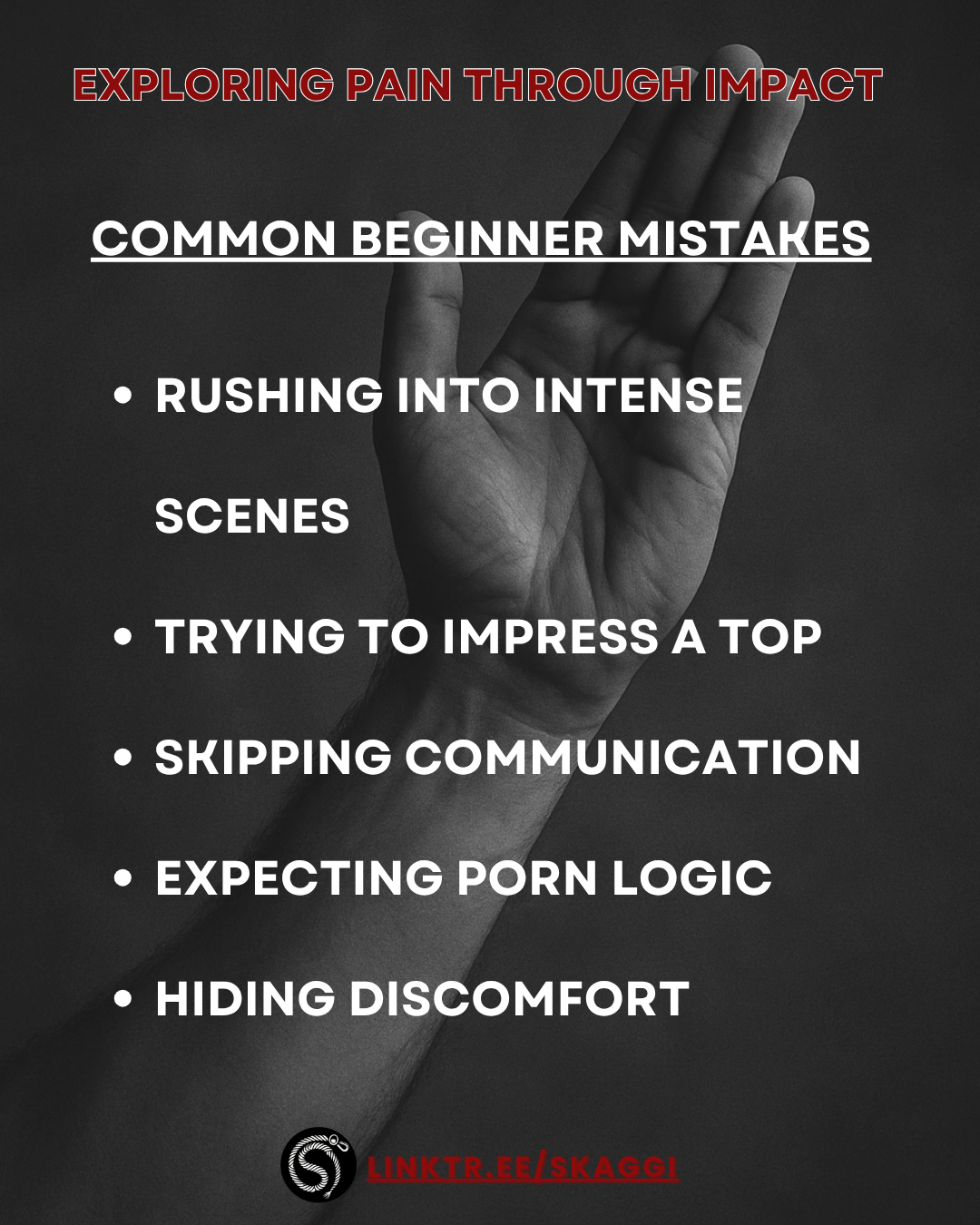
- Jumping into high-intensity scenes before they understand how their body responds
- Prioritising the tool or the top instead of their own goals
- Using porn or fantasy as a direct map to real-life play without adjusting for reality
- Not communicating discomfort because they’re afraid it’ll end the scene
- Believing pain should feel sexy right away, and feeling confused or ashamed if it doesn’t
All of these are normal. None of them mean you’re not “real” or “ready.” They’re simply signs that you’re still learning, and learning well.
Reflection
The first time you feel real pain on purpose in a kink setting can be disorienting. It can also be powerful, clarifying, even joyful. But it’s not just about what happens to your skin. It’s about what happens under it: in your breath, your nerves, your emotions.
If you can stay present, ask questions, and give yourself room to react without judgement, you’ll start building the foundation that every skilled bottom depends on: not pain endurance, but pain fluency.